Project Overview
In this capstone, I participated in a weekly business simulation called the Business Strategy Game (BSG), where teams operated virtual athletic footwear companies and competed directly against one another for market share. Each Sunday, the simulation processed all team decisions and generated performance reports, which we then analyzed before submitting updated strategies for the following week.
At the outset, teams selected a strategic positioning, choosing whether to compete as a high-quality, premium brand or a lower-cost, higher-volume producer. I served as the designated decision coordinator, responsible for consolidating team input and submitting a unified strategy each week to avoid conflicting changes and ensure consistency in execution.
Weekly Competitive Adjustments
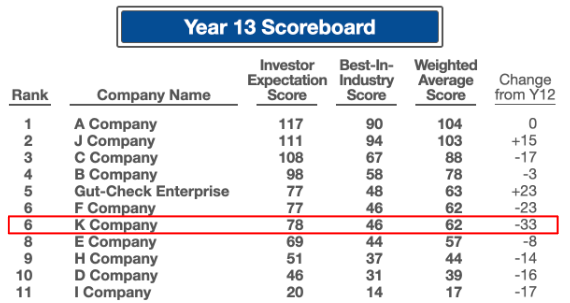
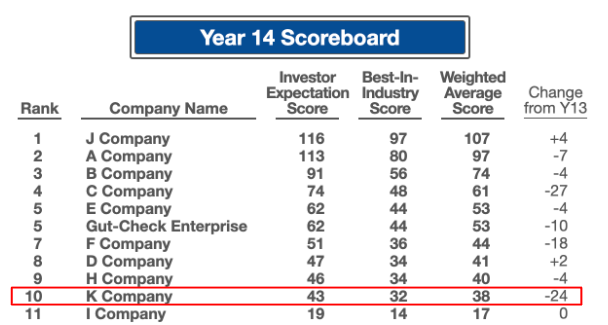
Each week, I analyzed the Sunday performance reports to assess how our decisions compared against competing teams. By Year 13, execution issues began to surface, particularly around quality planning and channel alignment. These challenges resulted in a sharp decline in our ranking, as shown in the early scoreboard results (Image A).
Identifying the Underlying Problem
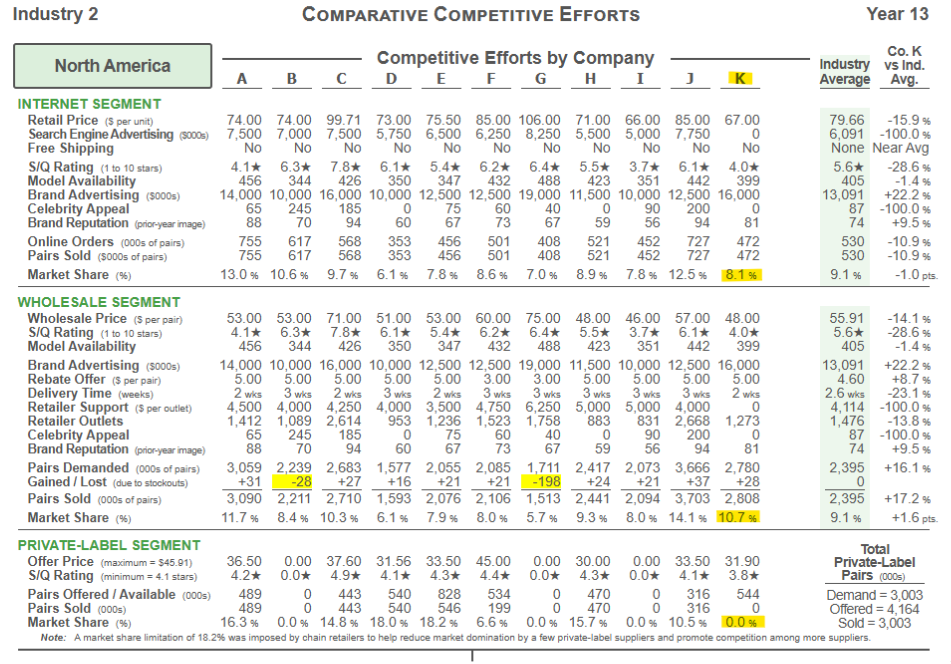
To diagnose the root cause of our decline, I conducted a deeper competitive analysis using Comparative Competitive Efforts reports (Image B). This analysis revealed that:
- • Our private-label S/Q rating fell below retailer requirements, eliminating sales in that segment
- • Pricing and celebrity appeal lagged behind competitors with similar product quality
- • An aggressive growth strategy, supported by short-term debt, assumed revenue that did not materialize
This comparative benchmarking clarified that the issue was not a single decision, but a misalignment between production quality, channel requirements, and financial assumptions.
Finding the Strategic Opportunity
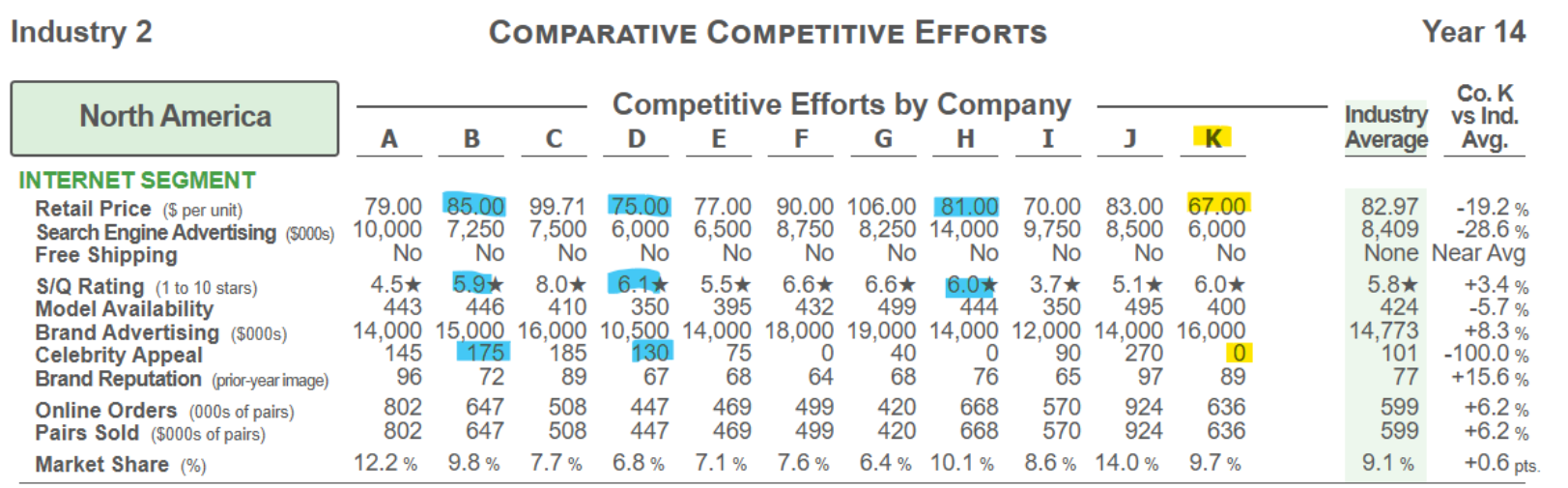
As I expanded the analysis to include subsequent rounds (Image C), a broader industry pattern became clear. Most teams were aggressively competing in internet sales, creating a saturated and highly competitive environment. In contrast, wholesale distribution was significantly underutilized across the industry.
Recognizing this gap, I identified wholesale as a strategic opportunity to scale volume, reduce direct competition, and stabilize performance while maintaining selective internet sales.
Strategy Shift and Execution
Based on these insights, our team devised and implemented a coordinated strategy shift focused on execution discipline and channel alignment:
- • Corrected S/Q ratings to meet retailer thresholds
- • Adjusted TQM and Six Sigma investments to stabilize quality
- • Repositioned pricing to emphasize affordability at scale
- • Increased marketing and celebrity appeal to reinforce brand credibility
- • Shifted production emphasis toward wholesale distribution
These changes were executed over multiple rounds, with each decision cycle aligned to reinforce the broader strategy (Image D).
Recovery and Performance Outcomes
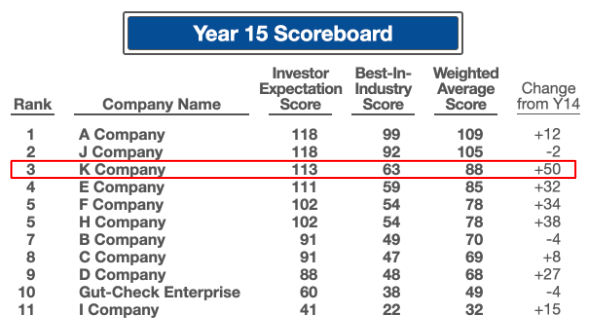
The impact of the strategy shift became visible quickly. By Year 15, our ranking rebounded sharply, jumping from near the bottom of the scoreboard to the top tier in a single year (Image E). Performance gains continued through the final rounds of the simulation.
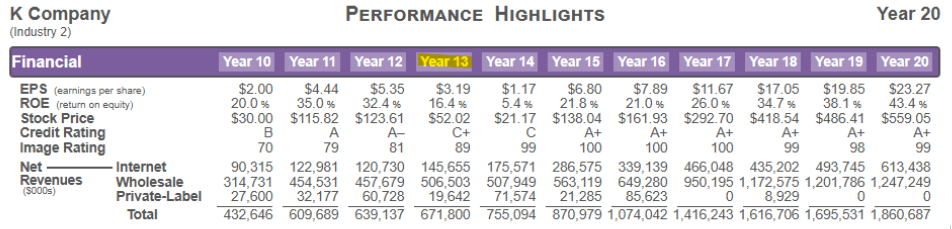
By Year 20, our company achieved:
- • Stock price of $559, compared to competitors as low as $21
- • Earnings per share of $23, the highest in the industry
- • Return on equity of 43 percent
- • A+ credit rating and A+ image rating
- • $1.8 million in total sales (Image F)
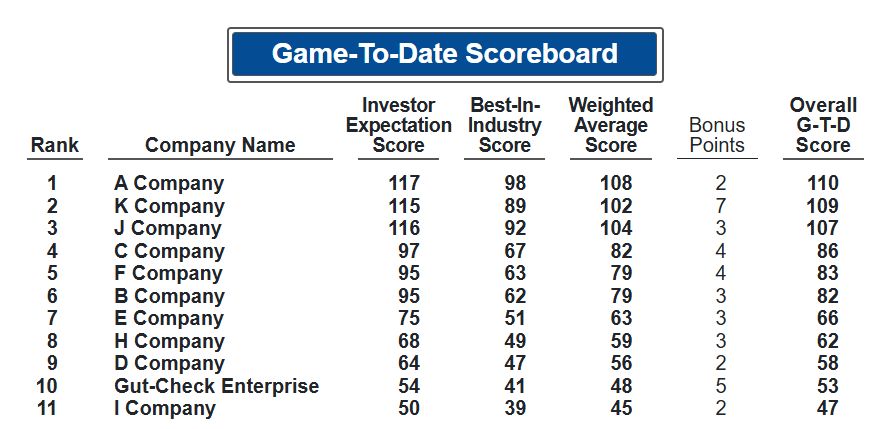
- • Second place finish in the class
Looking Back and Moving Forward
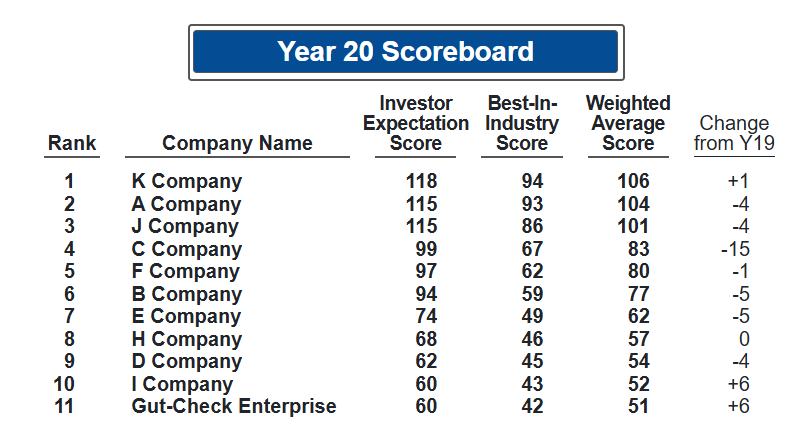
Beyond the results, this project reinforced my confidence in stepping into a leadership role and driving performance under pressure. In concrete terms, by Year 20, we secured first place for that final year (Image G) and finished second overall in the entire simulation (Image H). We turned a slow start into a strong upward trajectory, proving that a well-executed strategic pivot can achieve top-tier results.
But more than just the numbers, this experience was about navigating early setbacks, identifying the right strategic pivot, and coordinating execution across multiple rounds. It demonstrated my ability to lead data-driven decision-making and elevate a team's performance to a high level. Ultimately, that's the kind of impact I aim to bring into any real-world marketing scenario: turning insights into action and guiding a team to success.
P.S. Apologies for some of the highlights on the images to the side. The BSG is a subscription-based platform, and my class session has ended, so I couldn't specifically download the reports again. I had to find what I could from my old files.
Thank you!